| |||||||||||||||||||||||||||||||
| [include file=incs/-stormnav] | |||||||||||||||||||||||||||||||
Fuel Injector Spotters Guide and Information | |||||||||||||||||||||||||||||||
| So, how much power is this injector good for? That depends on the air/fuel ratio that is used, but a good rule of thumb is to divide this flow figure by 5 to get a hp capability. So, 322cc divided by 5 = 64hp maximum fuel flow with this injector.
If you want to be pedantic, it's the mass of the fuel (not the volume) which is the critical factor. Assuming a "normal" fuel density, the mass of the fuel in pounds per hour can be worked out by Dividing the cc per minute figure by 10.5.
For this injector, that gives a mass flow of 30.6 pounds/hour. To convert from pounds/hour to horsepower capability, multiply the figure by 2.04. So 30.6 pounds/hour multiplied by 2.04 gives a horsepower capability of 62.4hp - the same as we got from the cc/minute figure.
The power ratings discussed above are for each injector. This means that you need to multiply this rating by the number of injectors that are to be used. So, if you were using the Impulse RS 322cc injectors in a 4 cylinder engine (with one injector per cylinder) the max power that the injectors could deliver fuel for would be about 249.6hp. All of these figures are assuming that you are running an average fuel pressure of ~43psi and at 90% duty cycle. [!]Ads added 6/28/2017[/!] | |||||||||||||||||||||||||||||||
Calculators RC Engineering has the best calculators out there: http://www.rceng.com/technical.htm Fuel Injector Information - PAGE 2
Believe in Karma? Make a donation!
| |||||||||||||||||||||||||||||||


| Vehicle | Injector Types | Factory Flow Rating | Notes |
| 1990-'93 Geo Storm GSi | Peak and Hold | 222cc | |
| 1990-'93 Geo Storm 2+2 & Stylus S | Saturated | 222cc | |
| 1990-'93 Isuzu Impulse & Stylus XS | Peak and Hold | 222cc | |
| 1991-'92 Isuzu Impulse RS AWD | Peak and Hold | 322cc | |
| 1988-'91 Civic Si/CRX Si | Peak and Hold | 240cc | |
| 1992-'95 Civic | Saturated | 240cc | |
| 1996-'00 Civic dx cx and lx | Saturated | 190cc | |
| 1996-'00 Civic ex/si | Saturated | 240cc | |
| 1990-'91 Integra RS/LS/GS | Peak and Hold | 240cc | |
| 1992-'00 Integra LS/GS | Saturated | 240cc | |
| 1992-'96 Prelude Non-VTEC | Peak and Hold | 240cc | |
| 2003-'07 Honda Accord 3.0 liter V6 | Peak and Hold | 240cc | |
| 1992-'96 Prelude VTEC | Peak and Hold | 345cc | |
| 1997-up Prelude VTEC H22 | Saturated | 280cc | |
| 1991-up Sentra SE-R/200SX SE-R | Saturated | 265cc | |
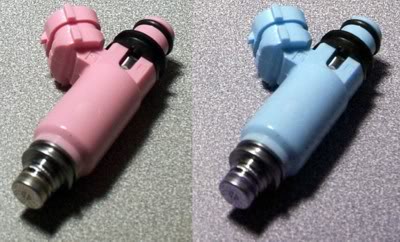
| 2002-up Subaru WRX | Peak and Hold | 380cc | Baby Blue |
| 2002-up Subaru WRX STI | Peak and Hold | 500cc | Pink |
| 1991-up MR2 Turbo | Peak and Hold | 440cc | |
| Toyota MR2(non-turbo) 5SFE 2.2L engine | Saturated | 213cc | |
| 1987-'92 Supra Turbo | Peak and Hold | 440cc | |
| 1993-up Supra non-Turbo | Saturated | 315cc | |
| 1993-up Supra Twin-Turbo | Peak and Hold | 550cc | |
| 2000-up Celica GT-S | Saturated | 310cc | |
| 1990-up Miata 1.6-liter | Saturated | 215cc | |
| 1993-up Miata 1.8-liter | Saturated | 240cc | |
| 1984-85 RX-7 195500-0900 | Peak and Hold | 680cc | Orange Top |
| 1986-87 RX-7 195500-1350 | Peak and Hold | 460cc | Red Top |
| 1986-87 RX-7 195500-1370 | Peak and Hold | 550cc | Tan Top |
| 1988 RX-7 195500-1350 | Saturated | 460cc | Purple Top |
| 1988 RX-7 195500-1370 | Saturated | 550cc | Purple Top |
| 1989-91 RX-7 195500-2010 | Saturated | 460cc | Red Top |
| 1989-91 RX-7 195500-2020 | Saturated | 550cc | Purple Top |
| 1993-up RX-7 Twin-Turbo | Saturated | Primary 550cc | Secondary 850cc |
| 1990-'96 300ZX Twin-Turbo | Saturated | 370cc | |
| 1991-up 3000GT/Dodge Stealth non-turbo | Saturated | 210cc | |
| 1991-up 3000GT VR-4/ Dodge Stealth R/T TT | Peak and Hold | 360cc | |
| 1989-up Eclipse/Laser/Talon Turbo/non-turbo | Peak and Hold | 450cc Blue Top(95+ Black top) 390cc Tan top 240cc Orange/pink Top 210cc Light Tan Top |
|
| Mitsubishi EVO | Peak and Hold | 510cc Yellow Top (1-3) 560cc Red top (4+) |
|
| 1986-89 Ford turboCoupe | Peak and Hold | 35lb/hr Brown Top 30lb/hr Green Top |
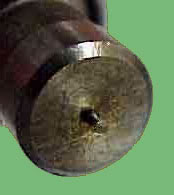
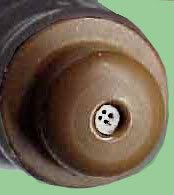
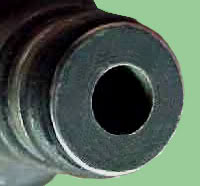
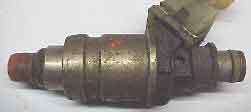
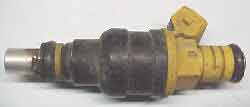
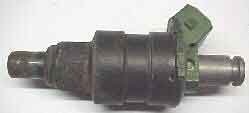
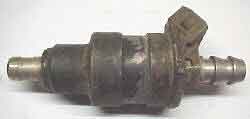
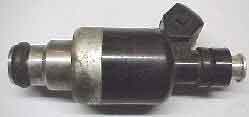
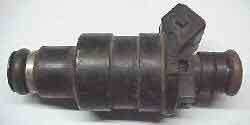
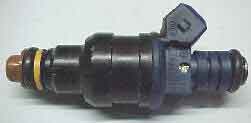
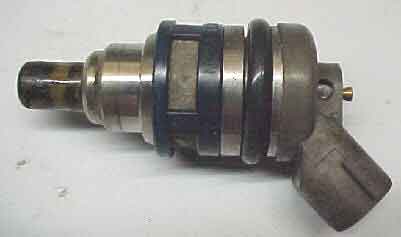
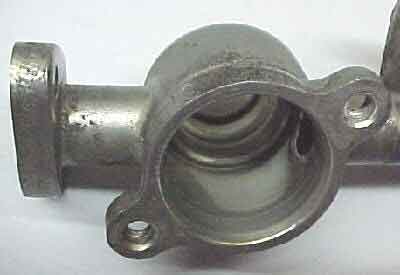
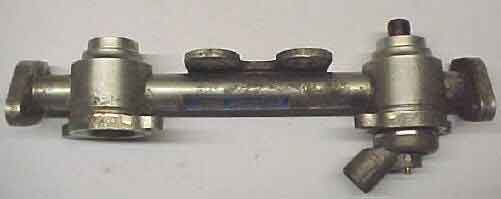
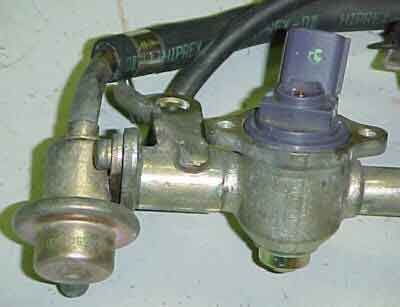
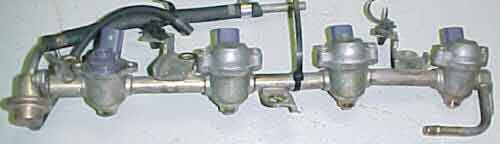
Electrical Connections 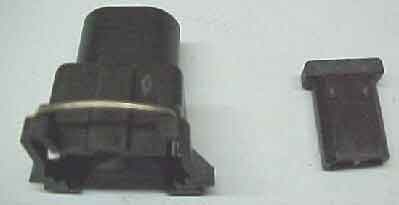 L-jet connector left, D-Jet right For the majority of injectors, there are two types of electrical connections. The D-Jetronic type used from 1967 to 1973 or so on Bosch injectors in which the plug fits internally into the injector and the L-Jetronic type in which the plug fits over the injector offreing a waterproof seal. Most injectors of all brands built after 1974 use the later type. Unfortunately, several Japanese manufactuers, notably Subaru and Toyota decided to make their own style connectors in the late '80s. These use an oval shaped plug. The D-Jet type will fit most types but is not waterproof.  D-Jet left, L-Jet middle/right, Barb left, small O-ring middle, 14mm Domestic O-ring right Fuel Transfer and Sealing Fuel transfer from the fuel rails was done with barb fittings and hose on early injectors as shown on the left above or small or large O-rings as shown above on the right. The later type uses a rigid fuel rail to hold the injectors down to the manifold as well as seal to the O-rings. Sealing injectors to the intake manifold usually involves one of two methods. Older type injectors used a square section O-ring slid over the pintle cap to sit against the steel injector body. Newer injectors use a 14mm round section O-ring sitting in an isolated groove. Some new engines use side inlet injectors, notably Subaru, Nissan and some Ford/Mazda engines. These are not compatible with other types.  Manifold end 14mm round O-rings left and middle, older square section right Flow Rates/ Pressure Most OE injectors are quite small because stock power outputs are usually quite low on production engines and metering is more precise with small injectors for better idle and emissions. Very few production engines use an injector flowing more than 500cc/minute or 50lbs./hr. For performance applications, engines often require much larger injectors to satisfy the increase in fuel flow. Often larger OE injectors can be fitted from a different engine. Sometimes aftermarket ones must be used. MSD makes 50, 72 and 96 lb./hr. types for racing which are popular. It is essential that you have injectors large enough to feed your engine at maximum power. Most OE systems maintain a fuel pressure of between 36 and 43.5 psi over the intake manifold pressure. Fuel pressure can be raised to increase the rate of fuel flow but this should not exceed 60 psi in most cases. It takes 4 times the fuel pressure to double fuel flow. Raising the pressure to extreme levels is very hard on the pump and can lead to leaks or failures in the plumbing and injectors themselves. Use the proper flow rate for the intended application. If you plan to fit used injectors to a performance engine, always have them flow and leak tested first. If they are not in proper condition, the engine will never run well. Gallery
|
|||||||||||||||||||||||||||||||
[include file=../incs/-folderfooter]