| |||||||||||||||||||||||||||||||||||||||||||||||||||||||||||||||||||||||||||||||||||||||||||||||||||||||||||||||||||||
| [include file=incs/-stormnav] | |||||||||||||||||||||||||||||||||||||||||||||||||||||||||||||||||||||||||||||||||||||||||||||||||||||||||||||||||||||
The following information is for the 1991 Lotus Elan M100 | |||||||||||||||||||||||||||||||||||||||||||||||||||||||||||||||||||||||||||||||||||||||||||||||||||||||||||||||||||||
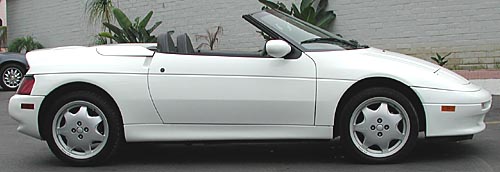 The Lotus Elan, known as the M100 amongst Lotus enthusiast to differentiate it from the early Elans, was built to "Allow 100 per cent of its owners to use 90 per cent of its performance 90 per cent of the time." Introduced in 1989, the Elan was the first all-new Lotus since 1975. The Elan was intended to please drivers moving up from a "hot hatch". It was instantly derided by the motoring press for lacking the tail-out handling of traditional sports cars. Sadly, it was the right car at the wrong time. Every Elan built lost Lotus, owned by GM at the time, money. When the car was introduced to the US in ’91, it cost the same as a Porsche 911. Only 3,000 were sold world wide before a stop was put to production in ’92. Even then the Elan didn’t die there. Lotus revived it as the Elan S2 in ’94 with a limited run of 800 to use up remaining engines that had been bought from Isuzu. These sold instantly. There’s also a Kia version of the car that was sold in the far East until Purchase of KIA by Hundi sometime in the summer of 1999. Click here to see more pictures of the Elan Engine Sales Brochure complements of GGLC - lots of good info, but conflicting specs. | |||||||||||||||||||||||||||||||||||||||||||||||||||||||||||||||||||||||||||||||||||||||||||||||||||||||||||||||||||||


|
|
||||||||||||||||||||||||||||||||||||||||||||||||||||||||||||||||||||||||||||||||||||||||||||||||||||||||||||||||||||
The Lotus Logos
 |
Since the creation of Lotus in 1948, the Lotus logo adopts a form very familiar to the designer:
-a curved English triangle, green in bottom, the name "LOTUS" and in its center, the 4 initials of the founder "ACBC" (for Anthony Colin Bruce Chapman). Letters and contours are gray-aluminium in color. -Placed in a circle of straw-yellow on the bottom, ringed with a fine gray edged aluminium. On certain racing racing cars, the logo is simply molten copper, some without color. The character font used then (sans serif) is changed later on for a finer police force (near to Times). The year of this change is unknown (If you know, contact me). |
 |
In 1968, the colors yellow and green are replaced with black. Black badges were used on Elan S4 models before Jim Clark's untimely death. It seems as if the change to black was done as a cost savings rather than as many people think, a tribute to Jim. In 1971, the limited series "JPS" for the Europa Spécial takes takes on the black color of the team, but the letters and rings became an alternate color. In 1978, the limited series of the Spirit commemoratives takes on the black logo and gold for the same reasons. The black logo appeared for the last time on all the cars produced in 1983, following the death of Chapman. |
 |
In 1986, the logo for Lotus changed significanty: the years which followed the death of Chapman were difficult, General Motors took the control of Group Lotus Plc. and wanted to usher the company into a new era, and quickly decided to equip the cars with a new stylized logo, completely different from the preceding logo. The cars were equipped with it to 1986. |
 |
This change caused an outcry among purists and amateurs, not because they are particularly attached to the old logo, but because the initial one represented the founder of the company, and was seen as a removal of Anthony Colin Bruce Chapman. |
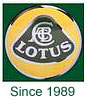 |
A lot of anger surounded this issue for about a year, then in 1989, Lotus returned to its historical logo, slightly redesigned the color tones and form: the straw yellow changed to a "orange norfolk mustard" yellow, and the green is darker. |
Links to Lotus Sites
Lotus Elan Central - The best forum out there for the Elan OwnerM111 - Lots of good info and photos on the Elan and Elise
Lotus Cars UK
Lotus Cars USA
Lotus Motorsport / Group Lotus PLC
Randy's Elan M100 site
Candles' M100 Elan
Got an Elan site? Email it to me!